
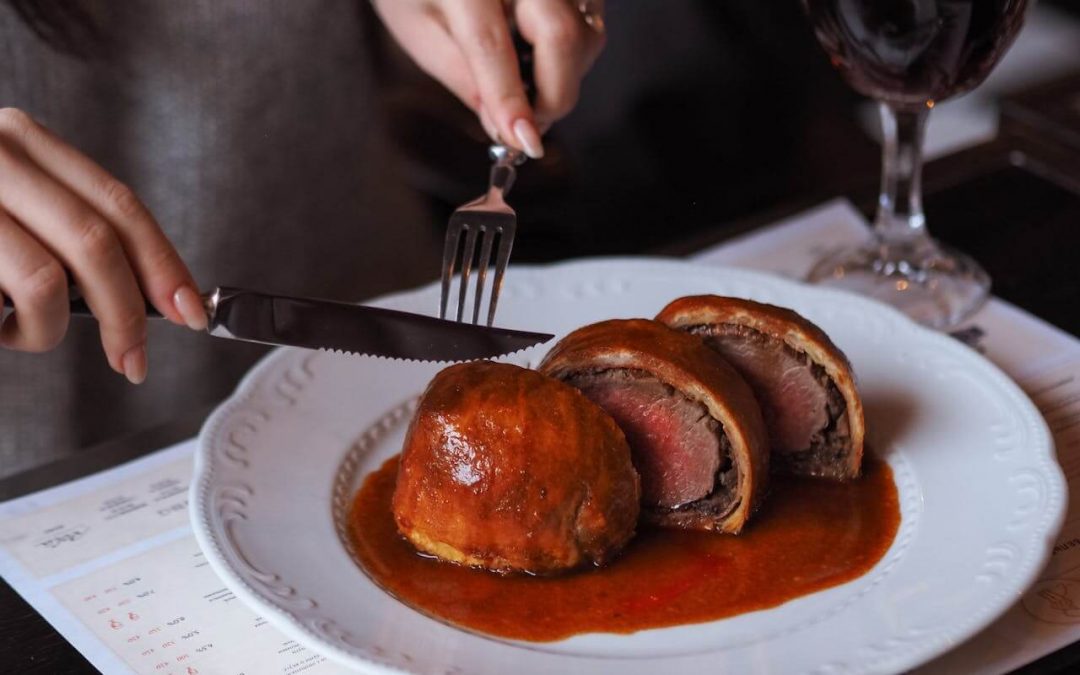
A great Beef Wellington recipe starts with a golden, flaky crust that cracks gently when sliced, then reveals a juicy, medium-rare pink Wellington center with savory mushroom duxelles and a thin prosciutto layer. It is the kind of showstopper dinner many San Diego hosts make for special occasions like birthdays, holidays, and special nights after a day near Balboa Park.
This recipe and cooking tips guide covers the parts that matter most: choosing the right ingredients, drying the duxelles, keeping everything cold, and using a thermometer so the center stays tender. The guide also includes a doneness chart, a quick reference table of common mistakes, and simple, restaurant-ready serving ideas.
Key Takeaways
- Sear the tenderloin and slather on mustard before chilling to lock in juices and boost flavor.
- Cook the duxelles very dry until it sticks to the pan, then chill it to avoid a soggy pastry.
- Wrap tightly with prosciutto and plastic wrap, then chill the log until firm for easy, neat pastry folding.
- Bake at 425°F until hot, pull at 105-110°F for a pink center, and rest for a while before slicing.
- Grab a probe thermometer and skip the guesswork to nail juicy beef every single time.
Essential Ingredients
A good Beef Wellington recipe starts with quality basics. This recipe is scaled for 4–6 servings, and it focuses on even cooking and a crisp crust.
Before the ingredient list, one key note matters: a uniform tenderloin shape helps the Wellington bake evenly. If needed, tie the tenderloin with butcher’s twine so it stays consistent from end to end.
Core ingredients (4–6 servings):
- Beef tenderloin (center-cut beef tenderloin): 2–3 lbs, trimmed
- Mushrooms for duxelles (cremini or button mushrooms): 1–2 lbs, finely chopped
- Prosciutto: 12–14 thin slices (acts as a moisture barrier)
- Puff pastry: 1–2 boxes or 1–2 sheets, all-butter if possible
- Dijon mustard: about 2 tablespoons
- Egg wash: 1 egg + 1 teaspoon water
- Seasoning: salt and pepper (go light because prosciutto is salty)
Substitutions and sourcing tips:
If someone avoids pork, bresaola can replace prosciutto and still retain moisture. For market shopping near the Gaslamp Quarter, the best approach is to buy fresh mushrooms and herbs that look firm and dry. Choose mushrooms with closed caps, then keep them cold until prep time. If planning a restaurant night instead, The Red Door’s dinner menu showcases the Wellington style served in Mission Hills.
Preparing the Beef Tenderloin
Beef Wellington cooking tips start with a strong sear and a full chill. Searing adds flavor and helps protect the pastry from excess surface moisture.
First, pat the beef tenderloin dry and season the tenderloin lightly. Sear it in a hot cast iron pan with a neutral oil like canola, about 1–2 minutes per side, just enough to brown, not cook through. Add thyme or rosemary to the pan if a person wants a light herb aroma.
While the beef is still warm, brush on a thin layer of Dijon mustard for tang. Then chill the tenderloin for 30 minutes or more to firm it up and wrap it cleanly. Skipping this chill often leads to messy wrapping and uneven baking.
Making Mushroom Duxelles
Duxelles is the most important “no soggy crust” step. The goal is a thick, dry mixture with no visible moisture.
Finely chop the mushrooms, shallots, and garlic, then sauté them in butter over medium heat. Stir frequently and cook until the mixture is completely dry, which can take 45–60 minutes depending on the pan size and moisture. A person can add a small splash of sherry or wine, but only after the mushrooms have released liquid and begun to dry out again.
A simple dryness test helps: when the cooked mushrooms stick to the pan and leave little to no wet streaks, it is ready. Cool it completely and chill it before assembly. If using a food processor, pulse to mince, but avoid puréeing, because a paste can trap moisture.
Assembling Layers
This stage is crucial to making beef Wellington properly; it locks in its shape, seals in moisture, and sets up for clean slicing later. The prosciutto layer and tight wrap prevent the pastry from soaking.
Start with plastic wrap laid out long enough to roll a log. Lay prosciutto slices slightly overlapping, then spread the chilled duxelles in an even layer, leaving about a one-inch border so it does not squeeze out.
Place the mustard-coated beef in the center, then roll tightly using the plastic wrap to help form a firm log. Twist the ends like a candy wrapper, then chill for at least 1 hour. Overnight is even better for structure.
Quick checks before the log goes into pastry:
- Make sure prosciutto overlaps without gaps.
- Keep the roll tight to prevent air pockets.
- Chill long enough that the log feels firm when pressed.
Wrapping in Puff Pastry
This is where temperature control matters most. Keep the pastry cold so it puffs instead of melting and turning greasy.
Roll chilled puff pastry to an even thickness, then place the log in the center. Fold, seal edges with egg wash, and place it seam-side down on the tray. If adding decorative scoring, do light, shallow cuts so the pastry stays sealed.
Brush the outside with egg wash and add a small pinch of salt. If the kitchen feels warm, chill the wrapped Wellington again for 10–15 minutes before baking so the pastry starts cold.
Baking for Perfection
Baking is where beef Wellington cooking tips pay off. A thermometer keeps the center juicy while the pastry turns crisp and golden.
Preheat the oven to 425°F and position the oven rack in the lower third. Bake on a lined sheet until the pastry is deeply golden and the beef reaches the pull temperature. A leave-in probe thermometer works best, inserted from the end into the center.
Below is the doneness chart for pull and final temps. For classic pink beef in the center, aim for the medium-rare range.
| Doneness | Pull Temp (°F) | Final After Rest (°F) | Notes |
| Rare | 100–105 | ~125 | Bright pink center |
| Medium-Rare | 105–110 | 130–135 | Juicy, classic target |
| Medium | 115–120 | 140–145 | Firmer, less tender |
After baking, rest the Wellington 20–30 minutes before slicing so juices settle. If the pastry browns too fast, tent loosely with foil during the last part of baking.
Common Mistakes to Avoid
Most Wellington problems come from moisture, heat, or loose wrapping. The table below shows the mistake, what it causes, and the fix that usually solves it.
| Mistake | Consequence | Fix |
| Wet duxelles | Soggy pastry | Cook until fully dry, then chill |
| No thermometer | Overcooked beef | Use a leave-in probe |
| Warm pastry | Weak puff, greasy crust | Chill between steps |
If the slice looks messy, the usual culprit is skipping a chill stage. Cold layers hold shape, seal better, and bake more evenly.
Serving and Sides
A clean slice is part of the payoff. Use a sharp serrated knife, slice about one inch thick, and wipe the blade between cuts if needed.
Simple sauces and sides work best. Serve with a red wine reduction, a light horseradish sauce, or grilled vegetables that feel right for a San Diego evening near the Coronado Bridge. Roasted potatoes, a crisp green salad, or seasonal veggies keep the plate balanced.
Reheat tip: Reheat slices in a 350°F oven or toaster oven until the center reaches about 130°F, and avoid microwaving because it softens the pastry.
Frequently Asked Questions
What are the best beef wellington cooking tips to prevent soggy pastry?
The best beef wellington cooking tips include fully drying the duxelles, using prosciutto as a barrier, and chilling the log before it is rolled in the pastry.
Should the beef be at room temperature before searing?
Yes, letting the beef sit briefly helps it sear more evenly, then it should chill well before wrapping so the layers stay firm.
How long should duxelles cook for Beef Wellington?
Most cooks need 45 minutes or more, and the key sign is when the mixture looks dry and sticks to the pan without wet streaks.
Why is a thermometer important for beef Wellington cooking tips?
A thermometer eliminates guesswork, helping prevent overcooking the tenderloin while the pastry finishes browning.
How far ahead can a person prep Beef Wellington?
A person can prepare the duxelles and wrap the beef log in advance, then keep it chilled and wrap it in pastry closer to baking for the best puff.
Where can people try Beef Wellington in San Diego if they do not want to cook?
The Red Door in Mission Hills serves Beef Wellington. You can contact us via the contact page for reservations.
Can The Red Door help with wine pairing for Beef Wellington?
Yes, the Red Door team can recommend wines that pair well with the dish, and guests can preview options on the wine list before visiting.
The Simple Formula for a Perfect Wellington
When you make Beef Wellington at home, success comes down to a few tips and tricks: dry duxelles, cold layers, tight wrapping, and a thermometer: dry duxelles, cold layers, tight wrapping, and a thermometer. When a cook respects rest time and keeps pastry cold, the result looks clean and tastes rich without feeling heavy.
Enjoy Beef Wellington in Mission Hills Without the Stress
For Italian dining in San Diego, The Red Door in Mission Hills offers a special-occasion Beef Wellington and a thoughtful wine experience. Contact us online or call (619) 295-6000 for reservations, and visit us in San Diego for a relaxed dinner night.